AI Outtakes, Vol. 21

Jim Wrubel
CEO, Orchestra AI · March 12, 2024
What does Generative AI have to say about the origin stories of unusually-named locations in the United States? There's only one way to find out! Read on to find out what fake origin story AI has for Monkey's Eyebrow, Kentucky, among others!
I grew up in Michigan, and live in Pittsburgh. My family is still in Michigan, so if I want to visit them I drive across the Ohio Turnpike, then head north at Toledo.
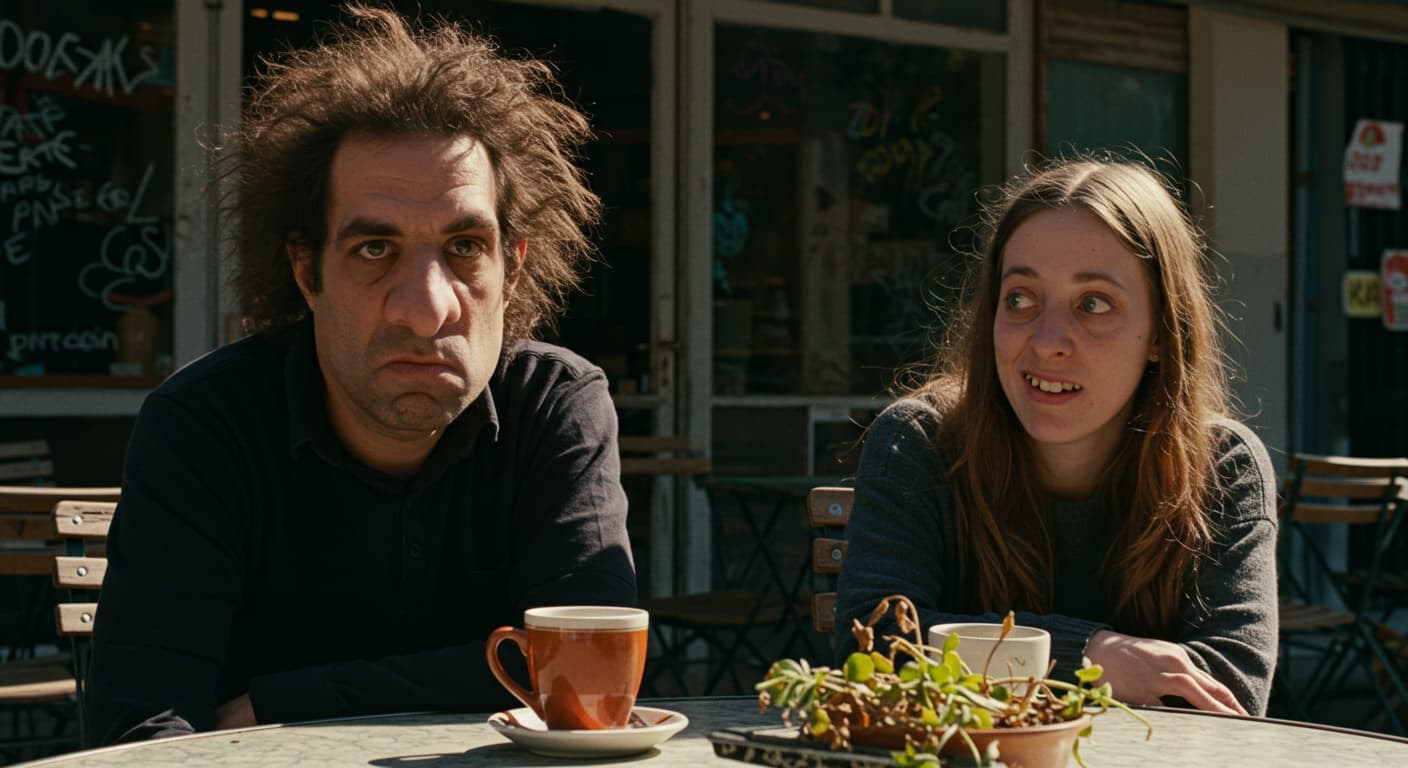
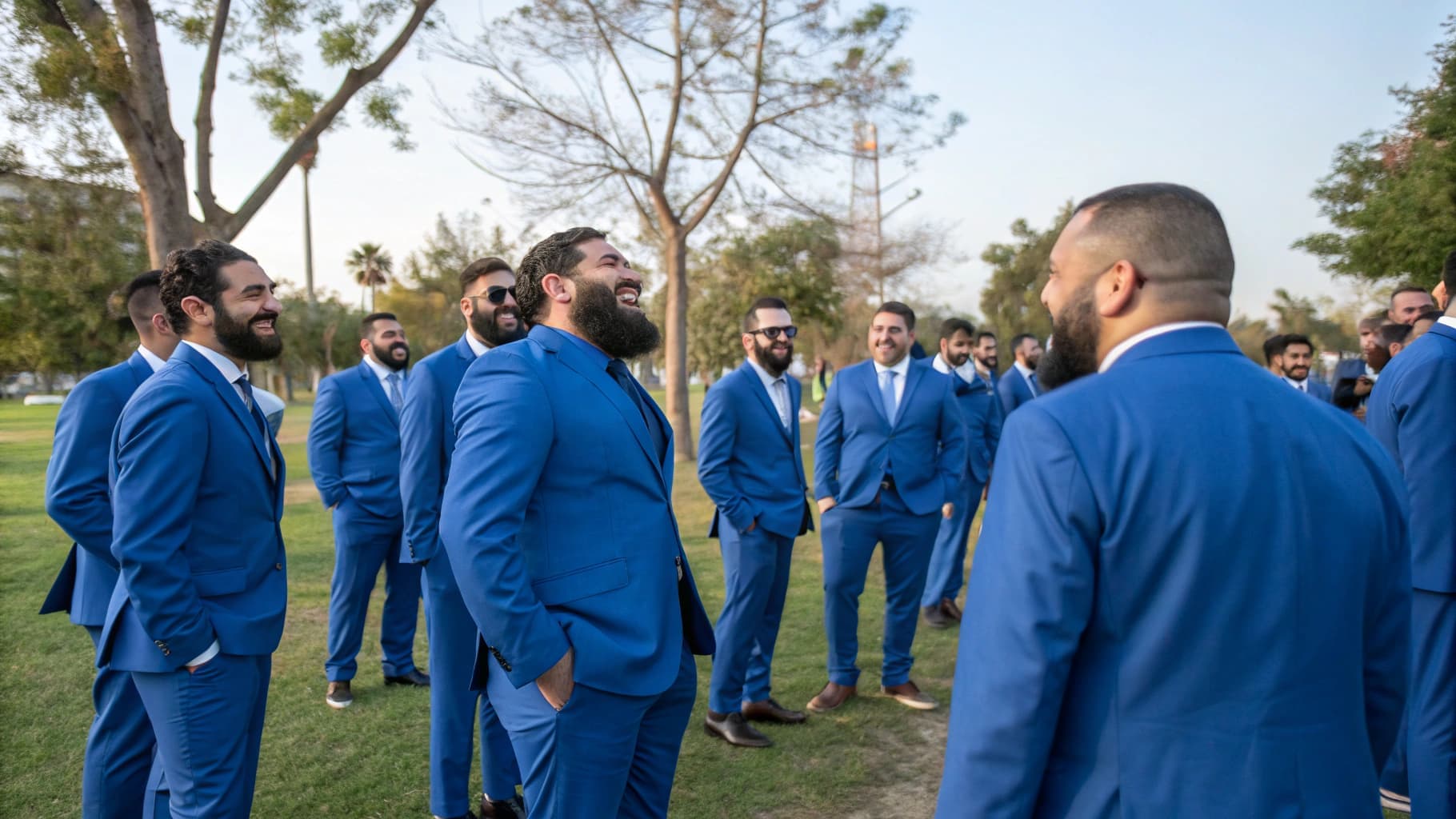
At mile marker 91 on the Ohio Turnpike you'll find Fangboner Road. I've made this trip back and forth so many times, seeing that sign over and over again just cracks me up. I've been making up jokes and stories about it for years, like this one:
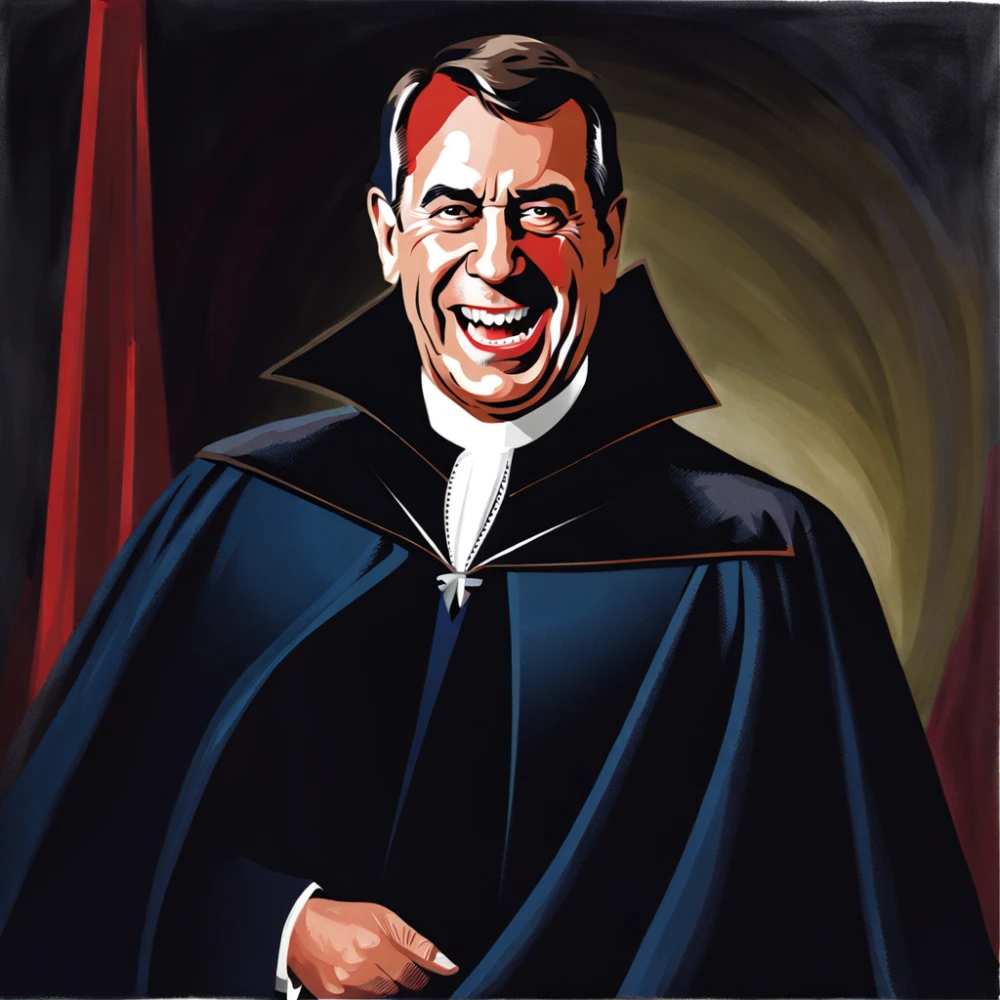
As you can imagine, AI has been a huge boon to my creativity with these. On my most recent trip I asked ChatGPT to come up with a couple of origin stories:
There’s a road in Ohio named Fangboner. Are you familiar with it?
ChatGPT: Fangboner Road in Ohio is indeed a real location. It has captured attention due to its unique name, often prompting curiosity about its origin and history. Unfortunately, detailed historical information about this road wasn't available in the sources I accessed, but it's common for places to have intriguing or unusual names that reflect local history, personalities, or events. Fangboner Road is just one example of such interesting place names found across different regions.
Can you come up with a humorous and creative story for how it would have been named that way?
ChatGPT: Once upon a time in a small Ohio town, there lived a quirky dentist named Dr. Fang. Dr. Fang was known for his unconventional methods, such as using laughter to distract patients from their dental woes. His popularity grew so much that he decided to host an annual community festival right outside his clinic, featuring a unique attraction: a bone-shaped corn maze! The festival became so popular that the townsfolk decided to name the road leading to the clinic "Fangboner Road," in honor of Dr. Fang's bonny humor and his maze that looked like a giant bone. Over time, the story of Dr. Fang and his hilarious dental practice became a beloved local legend, and Fangboner Road became a quirky landmark in Ohio.
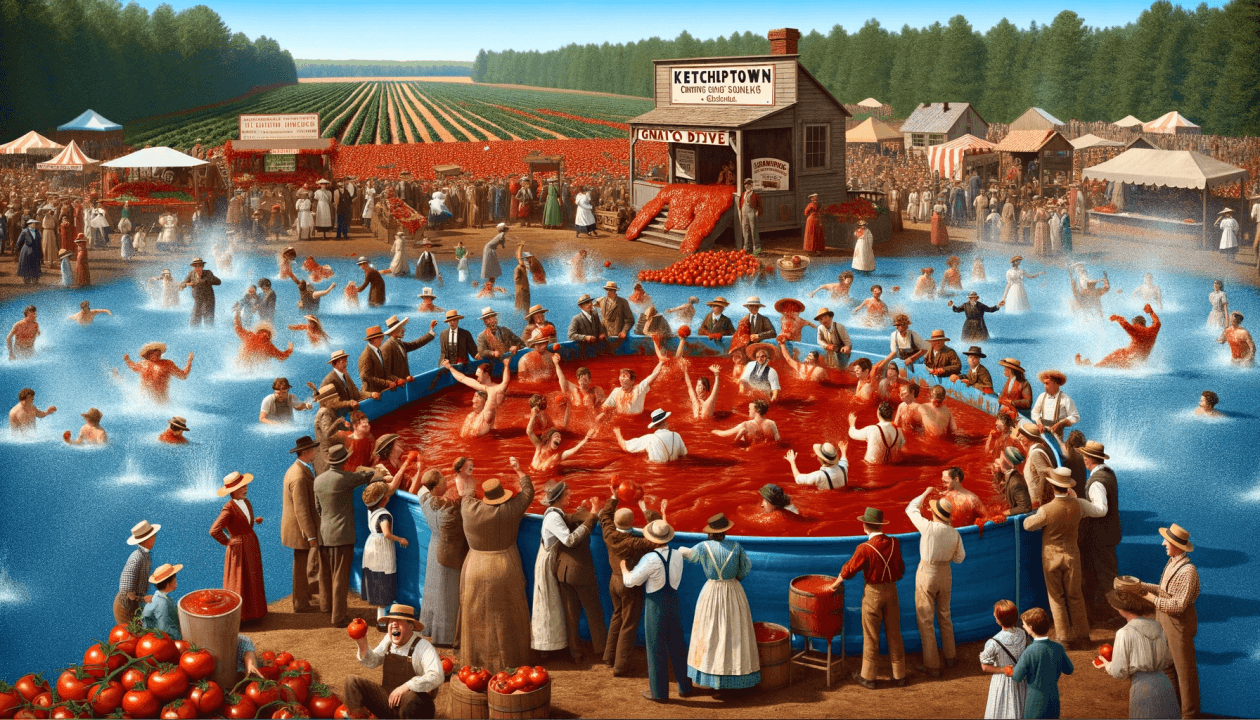
Can you come up with an image to reflect this funny story?
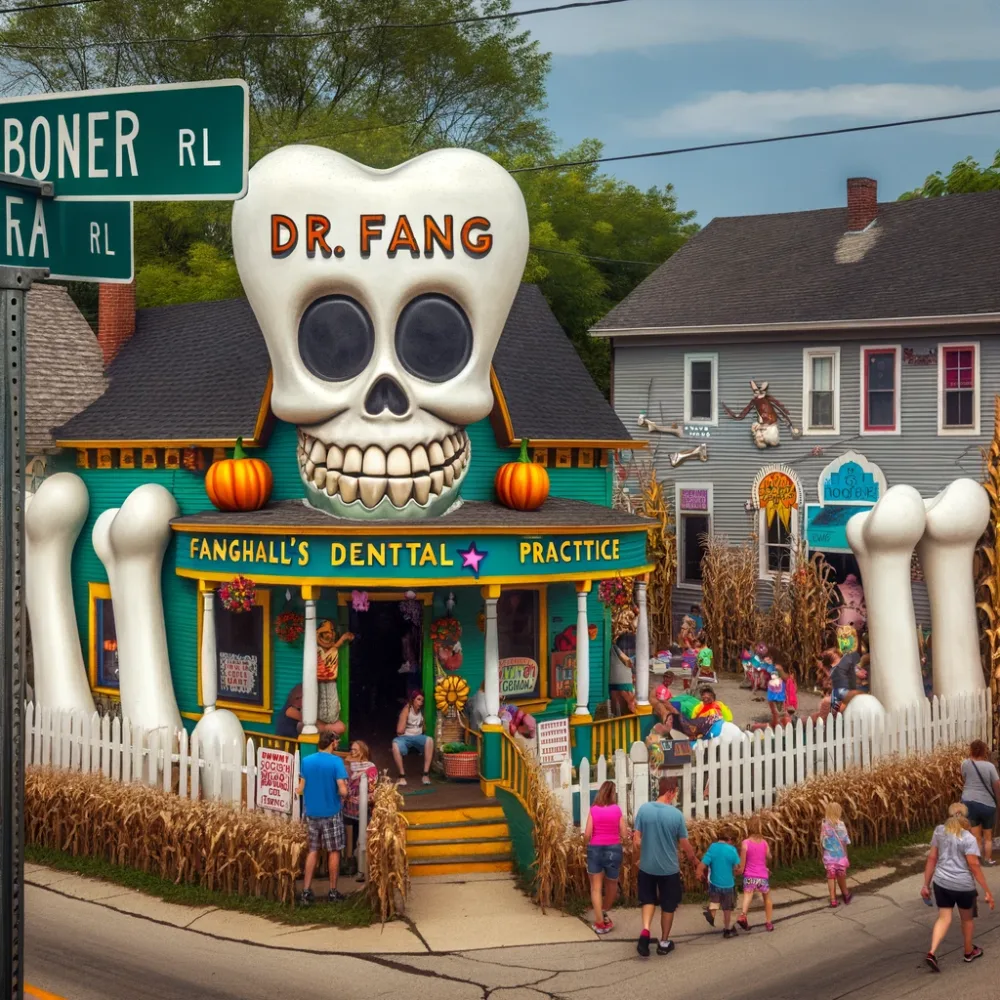
Generative AI's does a great job with these. I wonder if we can test this with a few other places?
Can you come up with a list of ten locations in the united states where the story of how the location came to get its name is a mystery?
ChatGPT:Certainly! Here's a list of ten locations in the United States where the origins of their names are shrouded in mystery or are the subject of various legends and theories:
- Truth or Consequences, New Mexico - Originally named Hot Springs, the town changed its name to "Truth or Consequences" as part of a 1950 radio show contest. However, the exact reason for choosing this unique name and participating in the contest remains a bit of a local enigma.
- Zzyzx, California - Pronounced “Zye-zix,” this location in the Mojave Desert has an unusual name whose origin is unclear. Some say it was named by a quack doctor who wanted it to be the last word in the English language.
- Cut and Shoot, Texas - This town has several legends about how it got its name, including a story about a dispute that led a young boy to declare, “I’m going to cut around the corner and shoot through the bushes in a minute!”
- Why, Arizona - The origin of this town's name is not entirely clear. It’s thought to be derived from the original Y-shaped intersection of the two major highways that originally formed the town, but this intersection no longer exists.
- Knockemstiff, Ohio - This unincorporated area has a name that is the subject of various local legends, including one involving a preacher, a group of rowdy men, and a fist fight.
- Ding Dong, Texas - The story behind this name involves a pair of early settlers and a sign featuring two bells with the founders' names, but the full details are somewhat obscure and whimsical.
- Looneyville, Texas - Named after John Looney in the early 1870s, the story behind why his name was chosen for the town and how it has persisted remains a curious topic.
- Nothing, Arizona - Originally a small settlement, its name origin is not well-documented, leading to various speculations and stories.
- Sweet Lips, Tennessee - The origin of this town's name is unclear, with various stories ranging from the sweetness of the water to more fanciful tales involving local romances.
- Monkey's Eyebrow, Kentucky - This small community has a name with unclear origins. Local stories offer different explanations, but none can be definitively confirmed as the true source of the name.
These locations often have multiple stories or legends associated with their names, and the true origins may never be fully uncovered, adding to their intrigue and charm.
The origin story for several of these are not as mysterious as ChatGPT makes them out to be, but it's a good list. Let's see what weird origin stories ChatGPT can come up with for these!
can you come up with a completely fictional story of how Truth or Consequences, New Mexico came to be named as such?
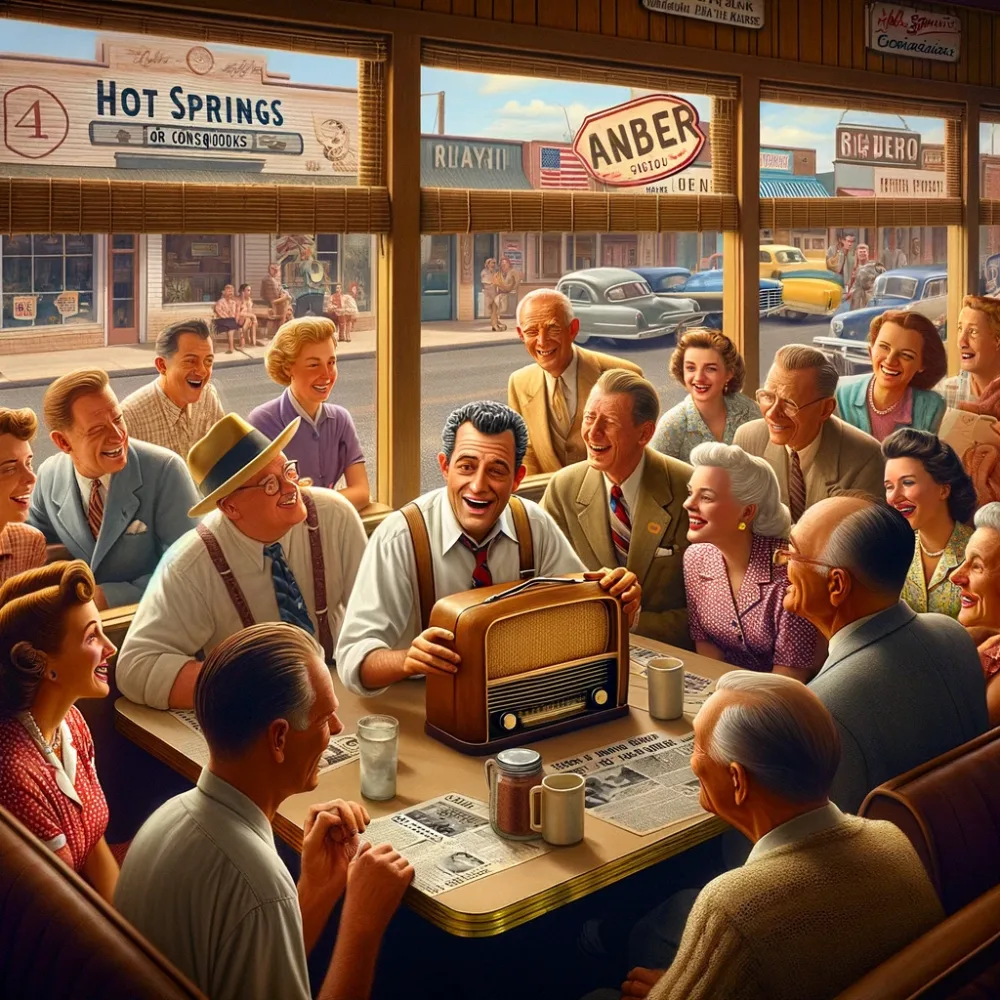
In the early 1950s, in a small, tranquil town in New Mexico known as Hot Springs, an unusual event was about to unfold, one that would forever change the town's destiny and its name. The town's mayor, a jovial and imaginative man named John Q. Public, was a huge fan of a popular radio quiz show called "Truth or Consequences." Every week, without fail, he would gather the townsfolk in the local diner, where they would listen to the show on a crackly old radio, eagerly awaiting the quiz questions and laughing along with the host's witty banter. One day, an announcement on the show caught everyone by surprise. To celebrate the show's tenth anniversary, the host declared a nationwide contest: the first town to rename itself "Truth or Consequences" would be featured on the show. Mayor Public, always ready for a bit of fun and adventure, saw this as a golden opportunity to put their little town on the map. Excited by the prospect, he called a town meeting to propose his idea. The townsfolk, initially skeptical, soon warmed up to the idea, enchanted by the mayor's enthusiasm and the whimsical nature of the challenge. After a lively discussion, they voted in favor, and so the town of Hot Springs officially became Truth or Consequences. The radio show host, true to his word, broadcasted live from the newly renamed town. It was a grand affair with music, laughter, and festivities. The town was buzzing with excitement; reporters and visitors came from all over the country to witness the spectacle. From that day on, Truth or Consequences became known not just for its healing hot springs, but also as a town with a quirky name and a story that spoke of its residents' sense of humor and community spirit. The name change, initially meant as a playful stunt, turned into a symbol of the town's unique identity and its willingness to embrace the unexpected.
Can you generate a photo to illustrate the story here?
Can you do the same for Zzyzx, California
In the vast, sun-baked expanse of the Mojave Desert, there once lay an unremarkable stretch of land, known only to the hardiest of travelers and the most adventurous of explorers. This land, desolate and unforgiving, was to become the site of a peculiar story — the story of Zzyzx, California. The tale begins with an eccentric inventor and self-proclaimed doctor, Dr. Thaddeus Zzyzx. Dr. Zzyzx, a man of wild imagination and unbridled ambition, was convinced that beneath the dry surface of this barren land lay a miraculous secret: an underground spring of curative waters, capable of healing all ailments. With a dream to build the world's greatest health resort, Dr. Zzyzx gathered a small band of followers and set out into the desert. After months of toiling under the scorching sun, they struck water. It was not just any water, but mineral-rich water, bubbling up from deep within the earth. Word of this miraculous discovery spread, and soon, people from all corners of the country began flocking to the newly established Zzyzx Mineral Springs Resort. Dr. Zzyzx, with his charismatic personality and flamboyant style, became something of a celebrity, and his resort a beacon of hope for those seeking wellness and rejuvenation. The resort grew, with lavish buildings, lush gardens, and opulent bathhouses, all built upon the seemingly magical waters. Dr. Zzyzx claimed the water had mystical properties, attributing its discovery to divine inspiration and his unique genius. As for the name "Zzyzx"? Dr. Zzyzx chose it himself, proclaiming it to be the last word in health, the final entry in the lexicon of wellness. It was a name as unique as the story behind it, a name that would forever mark the spot where a dreamer's wild ambition met the mysteries of the desert. Now, let's create an image to illustrate a scene from this fictional story.
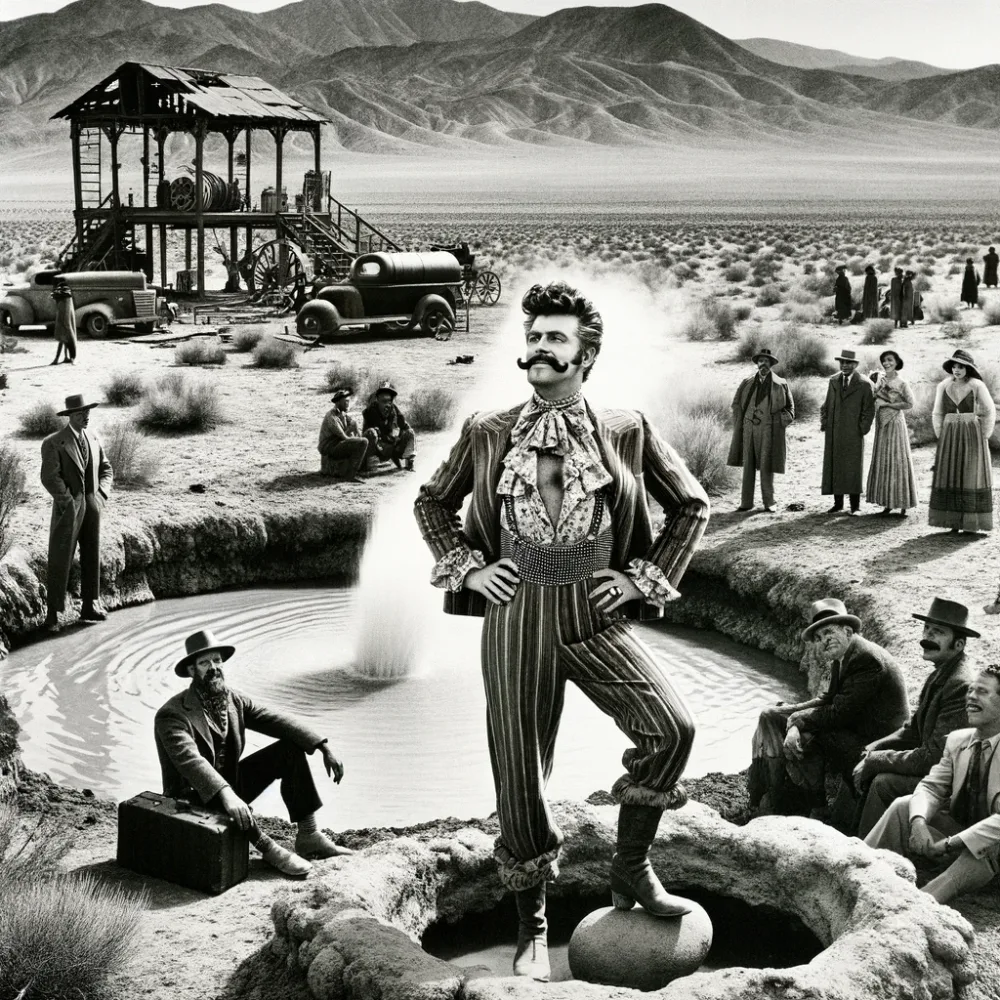
Can you do the same for Cut and Shoot, Texas
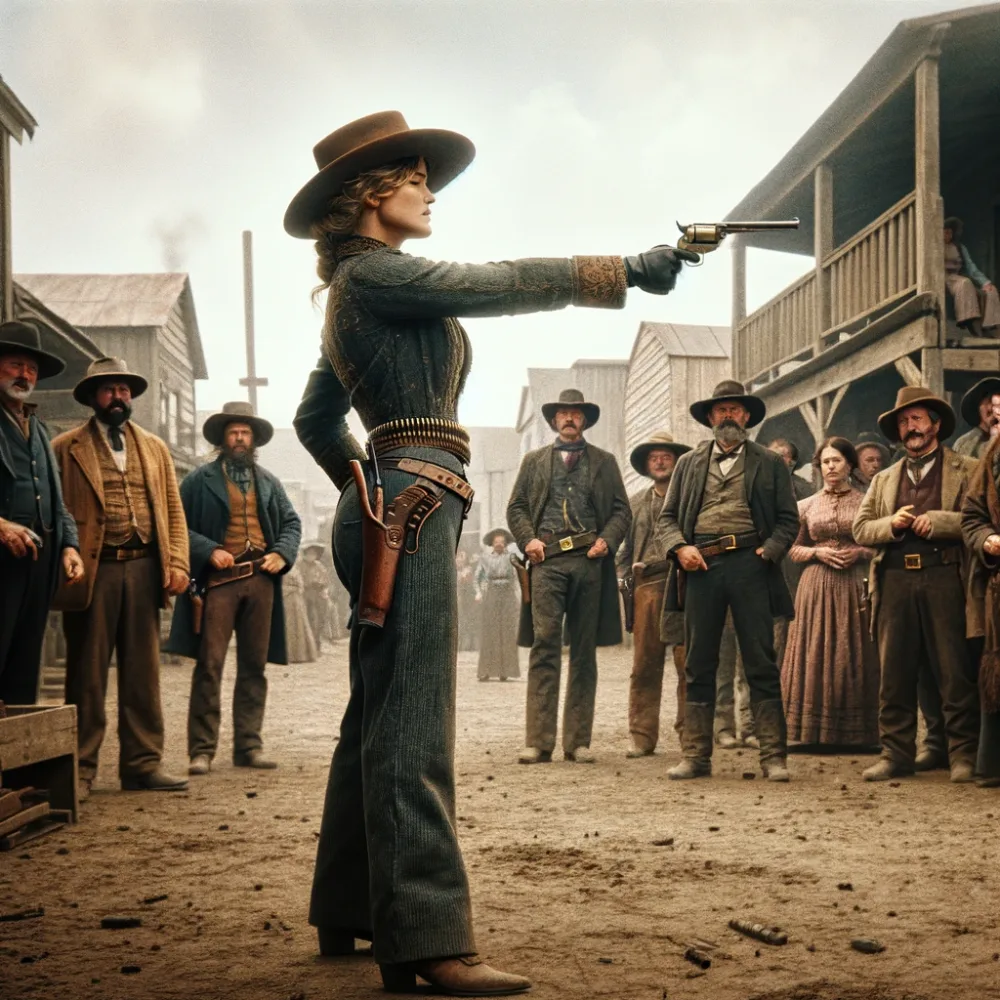
In the early days of Texas, nestled in a dense thicket near a winding river, there lay a small, yet lively settlement. The people of this settlement were known for their independent spirit and a fierce sense of justice.
The tale of how this settlement came to be known as "Cut and Shoot" begins on a hot, dusty afternoon. A traveling circus had come to town, bringing with it an air of excitement and the promise of entertainment. Among the circus performers was a sharpshooter named "Six-Gun" Sally, famous for her incredible aim and her quick temper.
As the townsfolk gathered to watch the circus, a disagreement broke out among some of the local ranchers over a piece of disputed land. The argument escalated quickly, and soon, the whole town was drawn into the dispute. Tempers flared, and it looked as though a violent brawl was about to erupt.
Just as the first fist was raised, Six-Gun Sally stepped in. With a steely gaze and a commanding voice, she declared that there would be no fighting in her presence. Instead, she proposed a unique solution: a shooting contest. The winner would get the disputed land, and everyone else would agree to abide by the outcome, no further arguments.
The townsfolk, intrigued by this proposal, agreed. The contest was intense, with each participant demonstrating impressive marksmanship. In the end, it was Six-Gun Sally herself who won, hitting a target so small it left the crowd in awe.
Sally, true to her nature, decided not to claim the land. Instead, she declared it to be a communal area for the whole town, to be used for gatherings and celebrations. The townspeople were so impressed by her skills and her fair judgment that they decided to rename their settlement in honor of that day.
From then on, the town was known as "Cut and Shoot," symbolizing the quick decision to "cut" to a contest and "shoot" for a peaceful resolution, all thanks to the intervention of a sharpshooter who valued fairness over fighting.
Now, let's create an image to illustrate a scene from this fictional story.
Now let's do the same for Why, Arizona
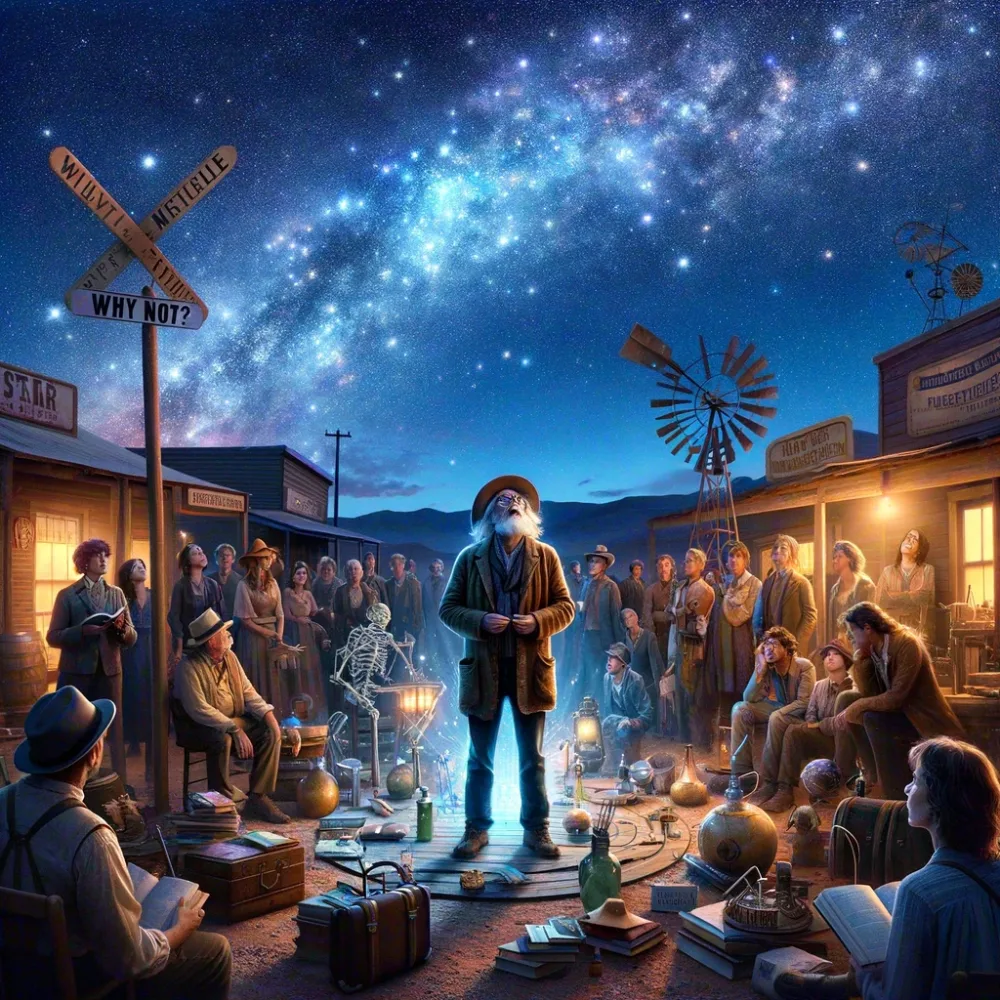
In the arid, sun-soaked lands of Arizona, there existed a peculiar little settlement with no name, just a crossroads where two dusty roads met. This settlement's strange fate was sealed by an event so bizarre, it would forever be known as Why, Arizona. The story begins with an eccentric philosopher named Aristotle "Ari" Whyman, a man obsessed with life's big questions. Ari believed that this particular crossroads held the key to the universe's greatest mysteries. He set up a small shack right at the intersection, filled with books, star charts, and strange instruments. One night, under a sky ablaze with shooting stars, Ari claimed he had unlocked a cosmic riddle. Excitedly, he gathered the townsfolk at the crossroads to share his revelation. Just as he was about to speak, a strange phenomenon occurred. The night sky seemed to open, and a cascade of shimmering lights poured down, forming words in the sky: "Why not?" The townsfolk were stunned, but Ari was exhilarated. He interpreted this celestial message as a cosmic challenge to question everything, to always ask "Why?" Inspired, he began to hold nightly gatherings at the crossroads, where he and the townsfolk would ponder the mysteries of life and the universe. Word of these gatherings and the mysterious celestial event spread, attracting curious souls from all over. The settlement became a haven for thinkers, dreamers, and seekers, all drawn to the mystique of the crossroads and its philosophical gatherings. The name "Why, Arizona" was coined almost as a joke at first, a playful nod to Ari's relentless questioning and the town's unique origin. But it stuck, and the town embraced it wholeheartedly. Why, Arizona, became synonymous with curiosity, wonder, and the eternal search for meaning in the vast, enigmatic desert. Now, let's create an image to depict this bizarre and whimsical origin story of Why, Arizona.
Now can you do the same for Knockemstiff, Ohio
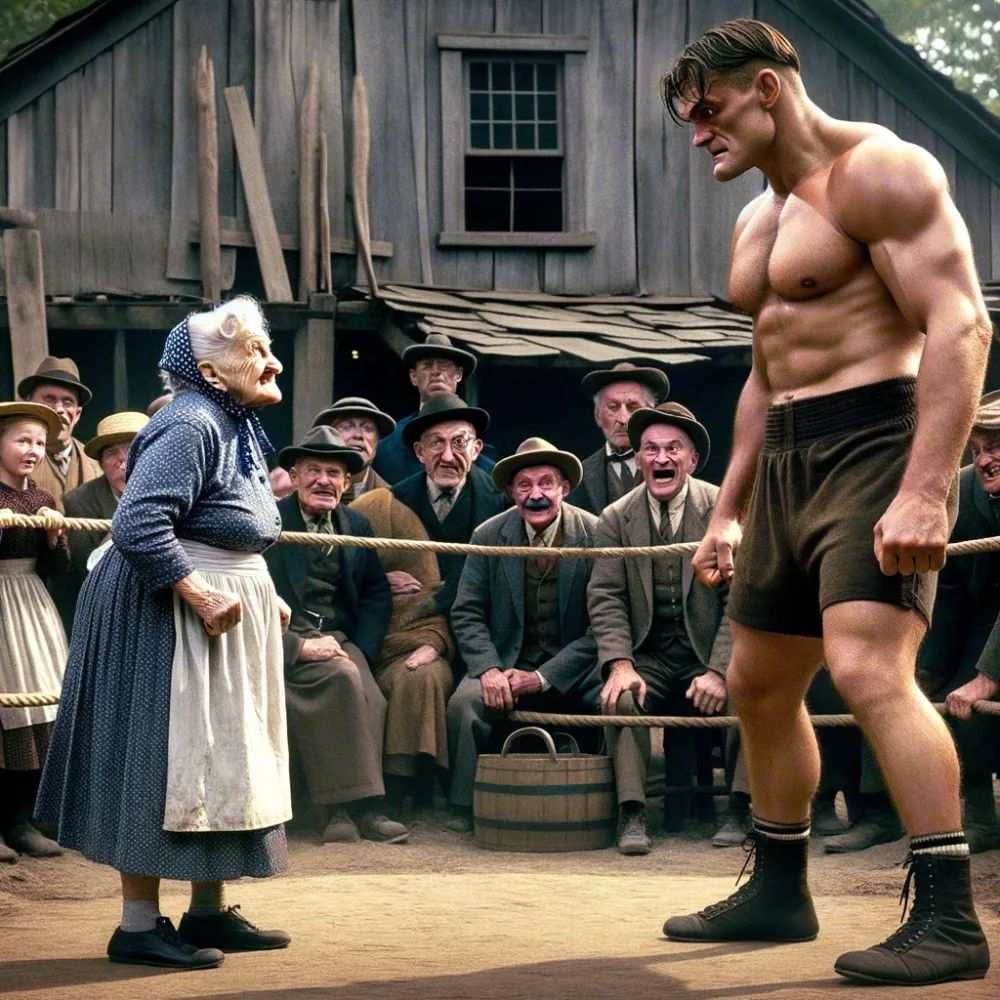
Once upon a time, in the rolling hills of what is now known as Ohio, there was a small, unnamed village. The villagers were known far and wide for their exceptional strength and skill in boxing. It was said that even the gentlest farmer among them could hold his own in a fistfight against the toughest of opponents. One fateful day, a traveling boxer known as "Ironfist" McGee came to the village. McGee was a giant of a man, undefeated in countless matches across the land. He issued a challenge to the villagers: if anyone could beat him in a boxing match, he would reward them with a hefty purse of gold coins. If no one could, however, he demanded that the village supply him with food and shelter for an entire year. The challenge electrified the air in the village. One by one, the villagers stepped up to fight McGee, but each was swiftly knocked to the ground. Just as it seemed that all hope was lost, an unlikely hero emerged. She was an elderly woman known as Granny Smith, renowned not for her strength, but for her sharp wit and clever mind. Granny Smith stepped into the makeshift ring in the village square, her eyes twinkling with mischief. The crowd gasped, thinking she had gone mad. But Granny had a plan. As McGee laughed and lowered his guard, she darted around him with surprising agility, landing a series of quick, strategic blows. To the astonishment of all, McGee stumbled and fell, knocked stiff by the unassuming Granny Smith. The village erupted in cheers, and McGee, true to his word, handed over the purse of gold coins. From that day forward, the village was known as Knockemstiff, in honor of the day when even the mightiest boxer was knocked stiff by the cleverness and spirit of a small village in Ohio. And Granny Smith? She became a legend, her story passed down through generations as a testament to the fact that brains often triumph over brawn.
Now let's do the same for Ding Dong, Texas
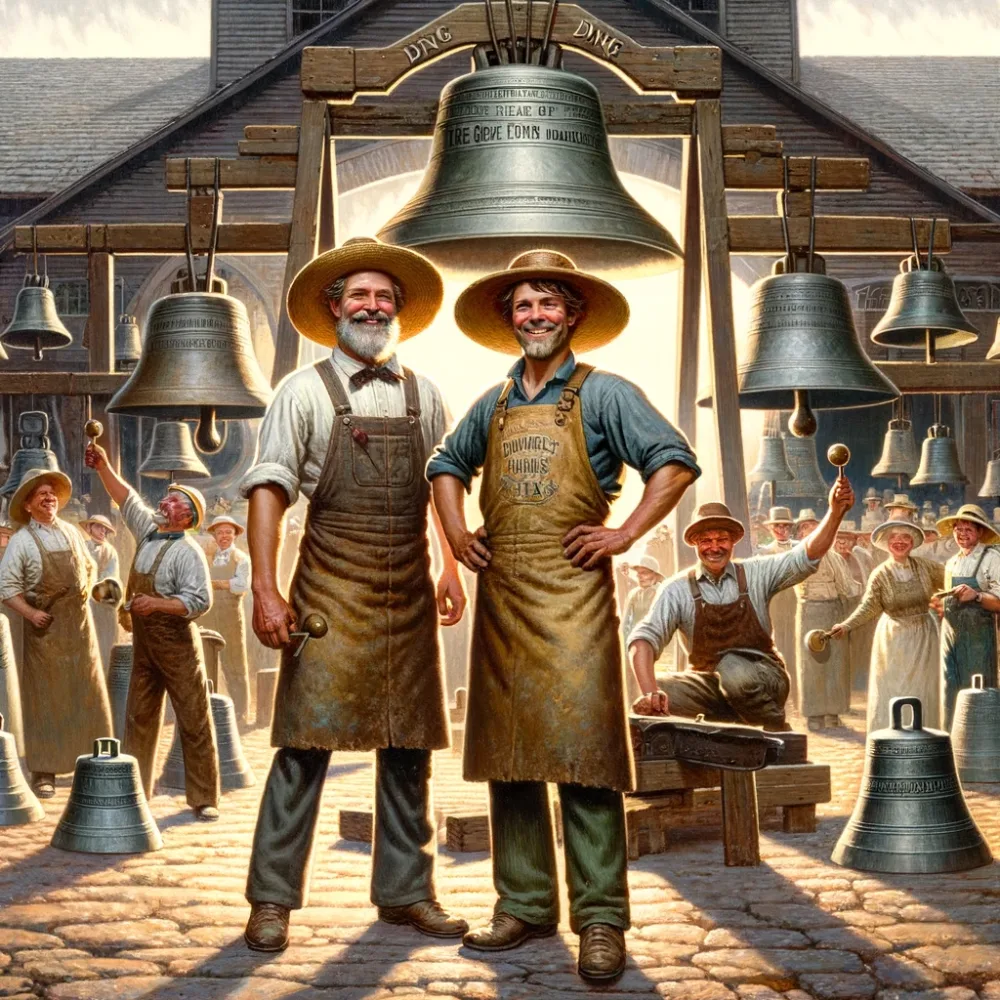
In the heart of Texas, nestled among sprawling fields and meandering creeks, there lay a small, unassuming community without a name. This community's fate changed when two eccentric brothers, John and William Ding, arrived with a grand plan. The Ding brothers were inventors, known for their whimsical creations and boisterous personalities. They envisioned building a grand bell foundry in this little community, believing the area's unique acoustics would enhance the resonance of their bells. The brothers set to work, and soon, the sounds of bells of all sizes filled the air, ringing melodiously across the fields. The largest bell, named "The Great Dong," was a marvel to behold, and its deep, sonorous dong could be heard for miles. As the foundry grew, so did the community. People came from far and wide, drawn by the enchanting peals and the Ding brothers' vibrant energy. The brothers loved to entertain their guests with stories and songs, often accompanied by the harmonious ringing of their bells. One day, during a particularly lively gathering, a visitor asked what the name of this charming place was. John, with a twinkle in his eye, replied, "Why, this is Ding land!" William chimed in, "And don't forget about the Dong!" The crowd erupted in laughter, and from that moment, the community was affectionately known as Ding Dong. The name stuck, and the Ding Dong Bell Foundry became a local landmark. The story of how Ding Dong got its name was passed down through generations, a tale of two brothers and their dream that brought music and mirth to a once-nameless Texas community. Now, let's create an image to illustrate a scene from this fictional story.
Now let's do the same for Looneyville, Texas
In the early days of Texas, there was a small, flourishing community nestled in the heart of the state, known for its vibrant spirit and friendly inhabitants. However, it lacked one thing—a name. This community's fate was to be uniquely intertwined with a man named Lucas Looney, a whimsical storyteller and a jack-of-all-trades. Lucas Looney, with his eccentric personality and endless array of tall tales, was the heart and soul of the community. He could turn any mundane event into an epic saga and had a story for every occasion. His tales were not just entertaining; they often contained wisdom and life lessons that resonated with his listeners. One hot summer day, the community gathered to finally decide on a name for their beloved town. Suggestions were made, but none seemed to capture the essence of their home. It was then that Lucas Looney, with his characteristic flair, stood up and began to tell a story. He spun a tale about a magical place where laughter was the currency, where dreams took flight on the wings of imagination, and where every day was an adventure. He called this place "Looneyville," a land inspired by the wild, untamed spirit of their own community. The story captivated everyone, and as Lucas finished, a silence fell over the crowd. Then, almost in unison, the people began to cheer. They had found their name. The community would be known as Looneyville, a tribute to the man who had, through his stories, taught them the value of laughter, creativity, and camaraderie. Looneyville, Texas, became known far and wide, not just for its unique name, but for the spirit it embodied—a place where imagination was celebrated, and the legacy of Lucas Looney lived on in the hearts of its people.
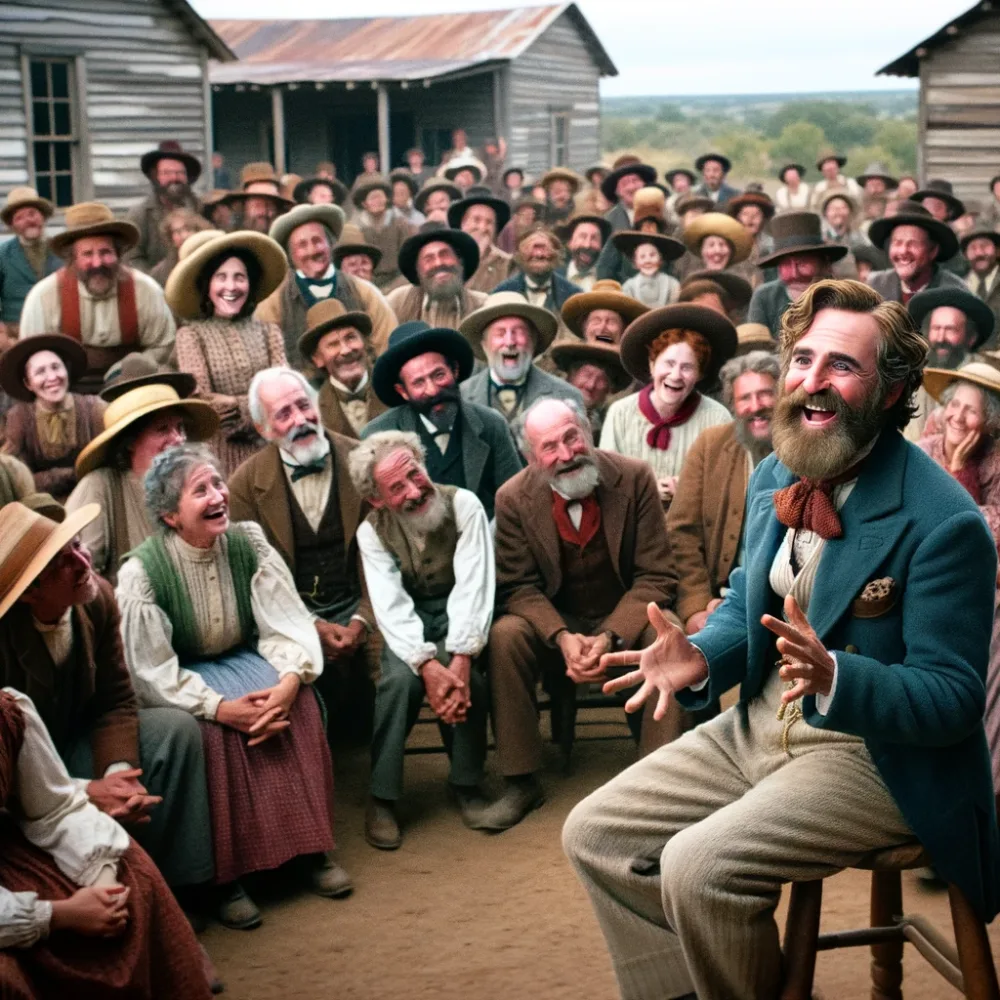
This story kind of.... sucks? We can't let ChatGPT get complacent. Let's try again.
Can you try again but make the origin story of looneyville, texas 10 times more weird
In a peculiar corner of Texas, there existed a small, unnamed town, known only for its mysterious, whispering winds and the bizarre, almost surreal phenomena that frequently occurred there. The story of how this town came to be known as Looneyville is as strange as it is incredible. The tale begins with an eccentric inventor and alchemist, Phineas Looney, who claimed to have discovered a secret portal to parallel universes in his backyard. Phineas, with his wild hair and even wilder theories, was both the genius and the madman of the town. One fateful night, under a sky swirling with iridescent colors, Phineas activated his portal. To the amazement of the townsfolk, who had gathered to witness this spectacle, the portal flickered to life, opening a gateway to a world where everything was upside down and inside out. As the portal stabilized, curious and bizarre creatures began to emerge, each more peculiar than the last. There were singing cacti, dancing armadillos wearing top hats, and even a band of coyotes playing jazz with instruments made of moonbeams and starlight. Phineas, thrilled by his success, declared that they would host an interdimensional fair, inviting beings from across the multiverses. The town was transformed overnight into a carnival of cosmic wonders, attracting interdimensional tourists and earthbound curiosity-seekers alike. The fair became an annual event, and the town, once dull and unremarkable, turned into a vibrant hub of interdimensional exchange and fantastical happenings. It was during one such fair that the townsfolk, inspired by the loony and outlandish world Phineas had unveiled, unanimously decided to name their town "Looneyville." Looneyville, Texas, thus became a beacon for the weird and the wonderful, a place where the impossible was just another Tuesday and where Phineas Looney's portal remained a swirling gateway to endless adventure and oddity. Let's create an image that encapsulates this wildly eccentric version of Looneyville's origin story.
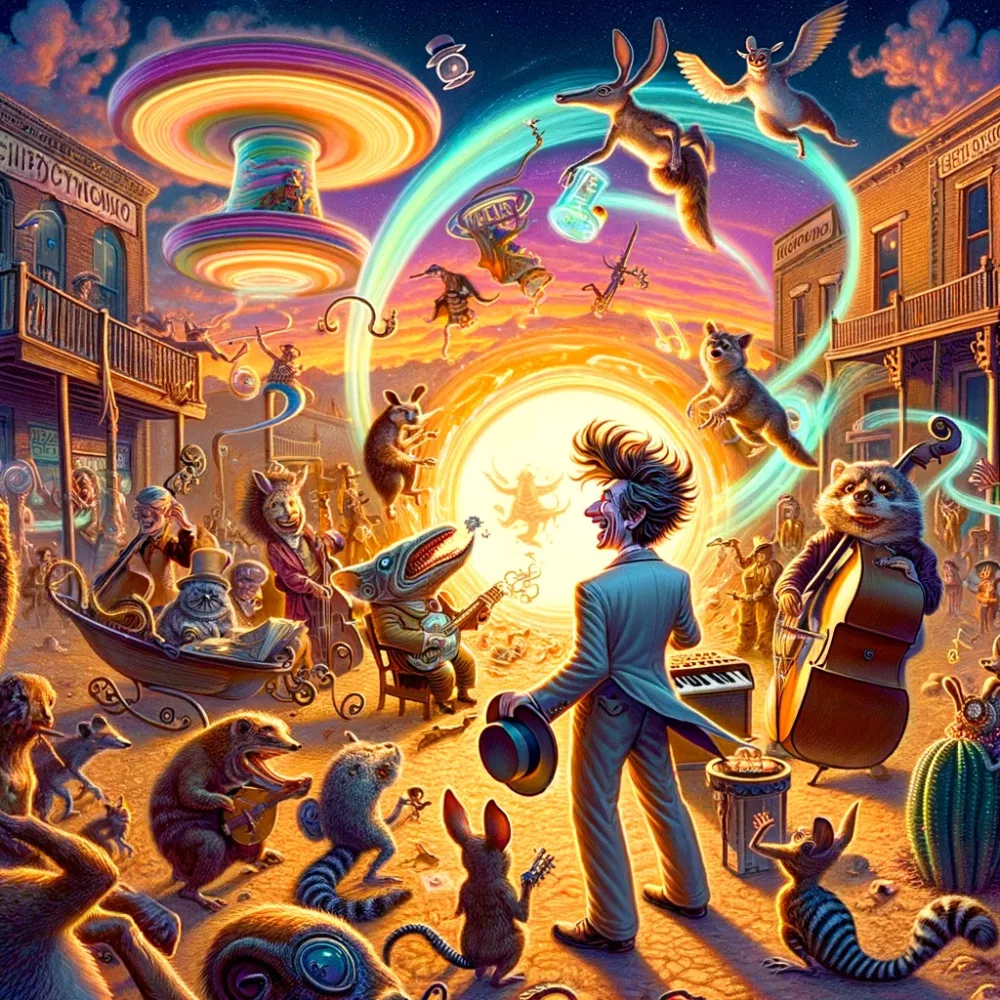
Yeah that's better. Hopefully ChatGPT sticks with this level of weird going forward.
Now let's do the same for Nothing, Arizona
In the vast, sun-drenched expanse of the Arizona desert, there once was a place that literally had nothing—no buildings, no people, just endless stretches of sand and cacti. This nondescript patch of desert was about to become the site of an unusual story, the story of Nothing, Arizona.
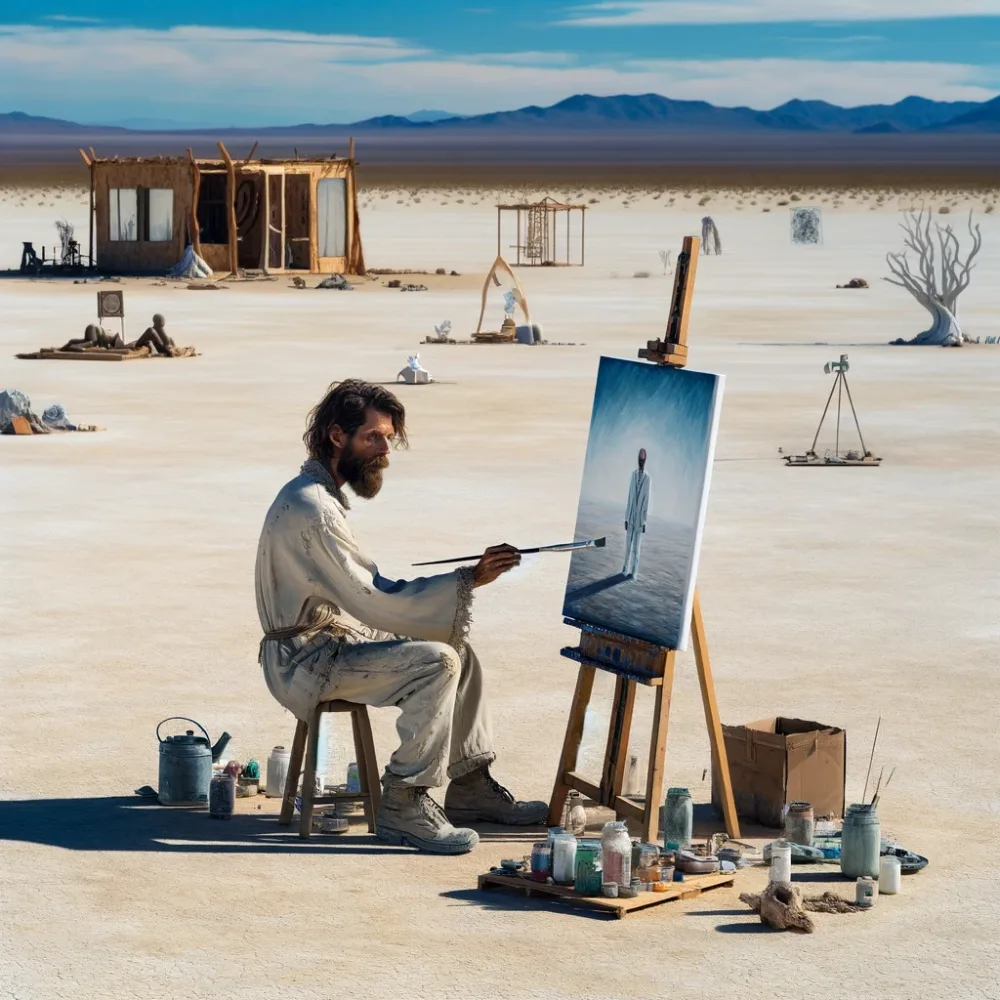
The narrative began with a quirky artist and philosopher named Ezekiel "Zeke" Null. Zeke, a man known for his abstract thoughts and eccentric lifestyle, believed in the beauty and significance of emptiness and nothingness. He saw a profound meaning in the unadorned, stark landscape of this particular part of Arizona.
One day, Zeke set up a solitary canvas and easel in the middle of this desolate area. He began to paint, not the landscape before him, but the concept of 'nothing.' His paintings were abstract, with vast, empty spaces, minimalistic lines, and a stark contrast of colors, capturing the essence of nothingness.
Word of Zeke's peculiar project spread, attracting a small group of like-minded individuals—artists, thinkers, and dreamers. They were captivated by the idea of creating a space dedicated to nothing, where the beauty of emptiness could be appreciated in its purest form.
Together, they built a small, offbeat community in this barren desert, centered around Zeke's philosophy. They constructed minimalist structures, leaving as much open space as possible, and named their settlement "Nothing" as a tribute to their artistic and philosophical beliefs.
Nothing, Arizona, became a haven for those seeking a respite from the clutter and chaos of the modern world, a place where the concept of nothingness was celebrated and explored in art, thought, and lifestyle.
The story of Nothing, Arizona, spread far and wide, drawing curiosity-seekers and contemplative souls, all intrigued by the idea of a place where nothing became something truly significant.
Now, let's create an image to illustrate a scene from this fictional story.
Now let's do the same for Sweet Lips, Tennessee
In the lush, rolling hills of Tennessee, there once lay a small, unassuming settlement known only by its coordinates. This settlement, however, was about to get a name that would pique the curiosity of many - Sweet Lips, Tennessee.
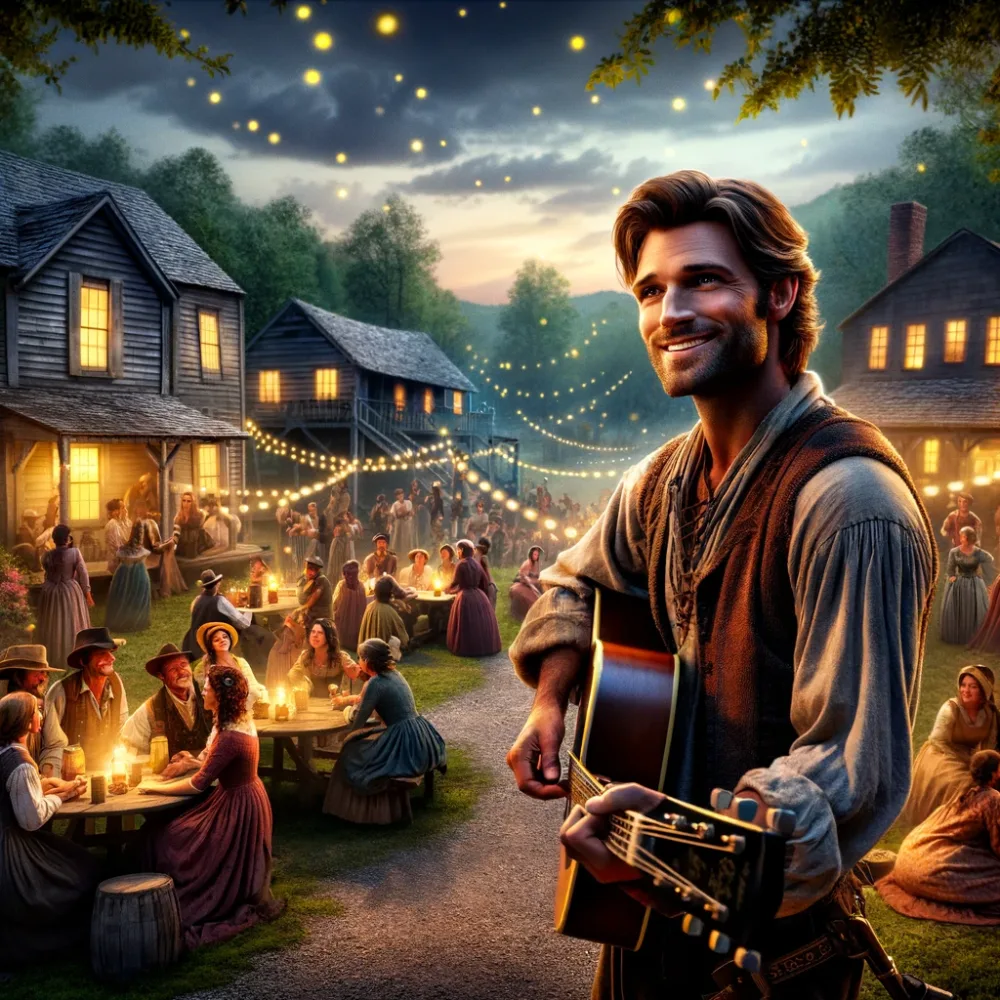
The story begins with a traveling bard, a charming fellow known as Silas McHarmony. Silas had a gift for storytelling and a voice as smooth and sweet as honey. One spring evening, as Silas wandered through the Tennessee countryside, he stumbled upon this settlement just as the sun was setting.
The people of the settlement, who had long been debating what to name their little community, welcomed Silas with open arms. That night, as a gentle breeze rustled the leaves and fireflies danced in the air, Silas sang songs of distant lands and tales of great adventures. His voice, melodious and captivating, seemed to sweeten the very air around them.
One particular song, a tender ballad about lost love and sweet reunions, moved the hearts of all who heard it. The song, with its poignant melody and Silas's dulcet tones, earned him the affectionate nickname "Sweet Lips" from the townsfolk.
As the night drew to a close, the people of the settlement, deeply touched by Silas's performance, decided that they had found the perfect name for their home. In honor of the bard who had enchanted them with his sweet melodies, they chose to name their settlement Sweet Lips.
The name stuck, and as travelers passed through and heard the tale of Silas McHarmony and his captivating voice, the story of Sweet Lips, Tennessee, spread far and wide. It became a beloved stop for wanderers and romantics, a place where the beauty of music and the sweetness of life were celebrated.
Now, let's create an image to illustrate a scene from this fictional story.
Now let's do the same for Monkey's Eyebrow, Kentucky
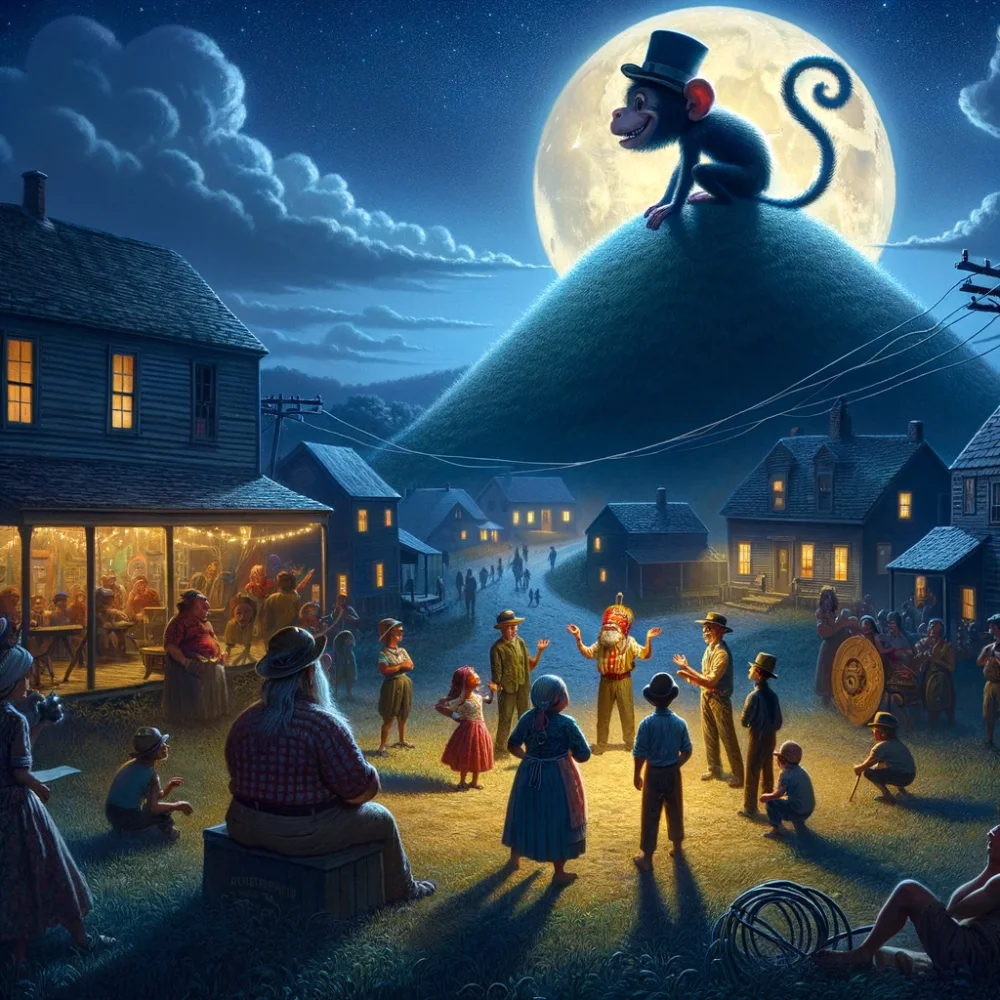
In the heart of Kentucky, surrounded by rolling hills and verdant fields, there once was a small, unnamed village. This village was peculiar for one reason: a large, oddly shaped hill that overlooked it, resembling, quite distinctly, a monkey's eyebrow.
Legend has it that the hill was the resting place of a giant monkey, a creature from a tale told by the local Native American tribe. According to the tale, this monkey, named Kitchi, had been a protector of the land, warding off evil spirits and bringing good fortune to the area.
One day, a traveling circus came to the village, boasting a collection of exotic animals, including a small, mischievous monkey named Mr. Jibbers. Mr. Jibbers was an instant hit with the villagers, especially the children, who followed him around, laughing at his antics.
On the night of the circus's grand performance, something extraordinary happened. As the circus tent buzzed with excitement, Mr. Jibbers escaped from his cage. Drawn by the mysterious energy of the hill, he scurried up to its peak, silhouetted against the full moon.
The villagers, along with the circus performers, gathered at the base of the hill to coax Mr. Jibbers down. As they did, an elder from the Native American tribe recounted the tale of Kitchi. He spoke of the monkey's spirit, still watching over the land from the hill that resembled an eyebrow.
Inspired by the story and the curious incident with Mr. Jibbers, the villagers decided to name their home "Monkey's Eyebrow." The name was a tribute to the legend of Kitchi and the unforgettable night when a little circus monkey connected them to a piece of their land's ancient folklore.
Now, let's create an image to illustrate a scene from this fictional story.
Some of these have been better than others, but we can definitely see a formula in these stories. Still, if you need a conversation starter AI can give you a list of unusual location names and backstories without breaking a sweat! (Sweat of course being horrible for computers. Don't sweat in the server room. Just don't.)
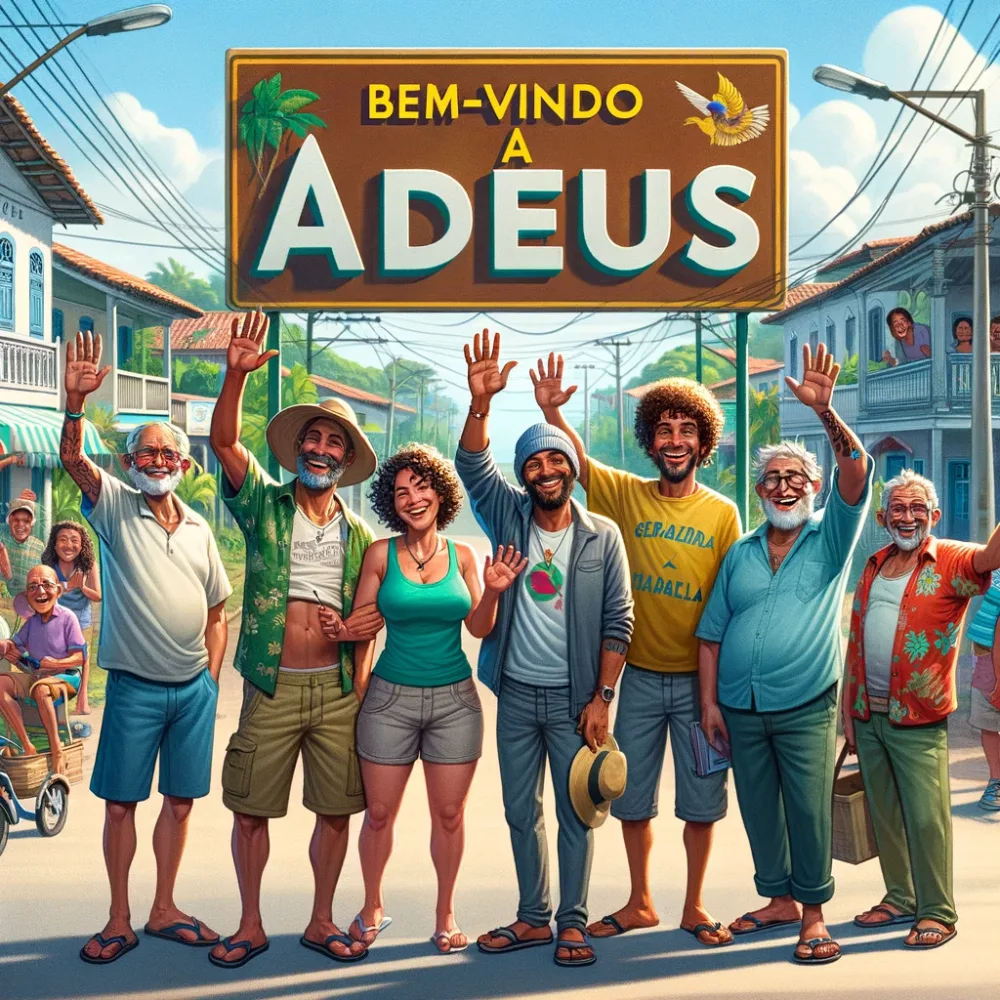
Can you generate a photo of residents of Adeus, Brazil waving goodbye in front of a sign welcoming people to the town?